

CA & GK
AI Is Now Minting Billion-Dollar Companies Faster Than Ever
The startup world just crossed a new milestone. According to the Hurun Global Unicorn Index 2026, released by the Hurun Research Institute
5 min read

Ask any CLAT topper what habit made the biggest difference to their preparation, and nine times out of ten, “reading the newspaper daily” will be somewhere near the top of the list. The Common Law Admission Test (CLAT) has, over the past few attempts, shifted decisively toward passage-based, comprehension-driven questions — even in sections like Legal Reasoning and General Knowledge/Current Affairs. This means that CLAT no longer rewards rote memorisation of facts; it rewards the ability to read dense text quickly, understand context, infer meaning, and connect events to their broader implications.
A newspaper, read consistently and intelligently, does exactly this. It is not just a source of “current affairs facts” for the GK section — it is a daily comprehension and vocabulary-building exercise, a civics lesson, an editorial-writing masterclass, and a window into how law, policy, and society intersect. But here’s the catch: not every newspaper serves this purpose equally well, and reading the wrong one (or reading the right one the wrong way) can waste hundreds of hours over a two-year preparation cycle.
This guide takes a deep, honest look at which newspapers actually work best for CLAT preparation, why they work, how to use them efficiently, and how to build a sustainable daily reading habit that pays off on exam day.
Before comparing newspapers, it’s worth understanding exactly what CLAT expects from you, because that shapes which newspaper — and which sections of that newspaper — deserve your attention.
This section draws heavily on events from the preceding 12–18 months: legislative changes, court judgments, government schemes, international relations, sports, awards, and important reports. A newspaper is the primary raw material for this section, especially because most static GK can be picked up from static GK compilations, but current affairs simply cannot be “learned” from a book written months earlier.
CLAT’s English section now largely consists of 450-word passages drawn from contemporary articles, opinion pieces, and non-fiction excerpts — often from newspapers or magazines themselves. Regular newspaper reading trains your brain to read unfamiliar, moderately difficult prose quickly and extract the main idea, tone, and argument — exactly the skill tested here.

Legal Reasoning passages increasingly draw from real-world legal developments — new legislation, landmark judgments, policy debates around law. A newspaper with strong legal and judicial coverage gives you a running start on these passages because you’re not encountering the underlying issue for the first time in the exam hall.
Editorials and opinion pieces are essentially structured arguments — premises, assumptions, counter-arguments, and conclusions. Reading them regularly sharpens your ability to identify argument structure, which is the core skill tested in Logical Reasoning.
Editorial and opinion sections use precise, formal English — the register CLAT passages are written in. Reading them regularly expands vocabulary organically, in context, which is far more effective than memorising word lists.
Given all this, your newspaper choice should be judged on five criteria: depth of coverage, quality of editorial writing, legal and judicial reporting, language level, and consistency/reliability.
Why it’s the most recommended newspaper for CLAT:
The Hindu is, by a wide margin, the most commonly recommended newspaper among CLAT toppers, coaching institutes, and mentors. There are concrete reasons for this, not just tradition.
Limitations:CLAT Legal Reasoning: Complete Guide & Tricks for Beginners 2026
Verdict: For most aspirants, The Hindu remains the single best all-round newspaper for CLAT, particularly if you’re preparing over a longer runway (one to two years) and can afford the initial adjustment period.

Why it’s a strong alternative or supplement:
The Indian Express has earned a reputation as arguably the most incisive and politically independent editorial voice among Indian English dailies, and its “Explained” section deserves special mention.
Limitations:
Verdict: An excellent primary choice, and arguably the best supplement to The Hindu if you have time to read two newspapers. The “Explained” section alone justifies at least a daily skim.
CLAT’s GK section, and increasingly its Legal Reasoning passages, dip into economic policy, budget provisions, trade law, taxation, and business regulation. A financial daily fills this gap that general newspapers often leave thin.
Verdict: Not a replacement for The Hindu or The Indian Express, but a valuable weekly (not necessarily daily) supplement — especially reading the front page and opinion section once or twice a week for major policy stories.CLAT 2026 UG Syllabus
Times of India is India’s most widely circulated English daily, and its accessibility is both its strength and its weakness for CLAT purposes.
Verdict: A reasonable starting point for absolute beginners to build the daily habit, but most serious aspirants should transition to The Hindu or Indian Express within a few months.
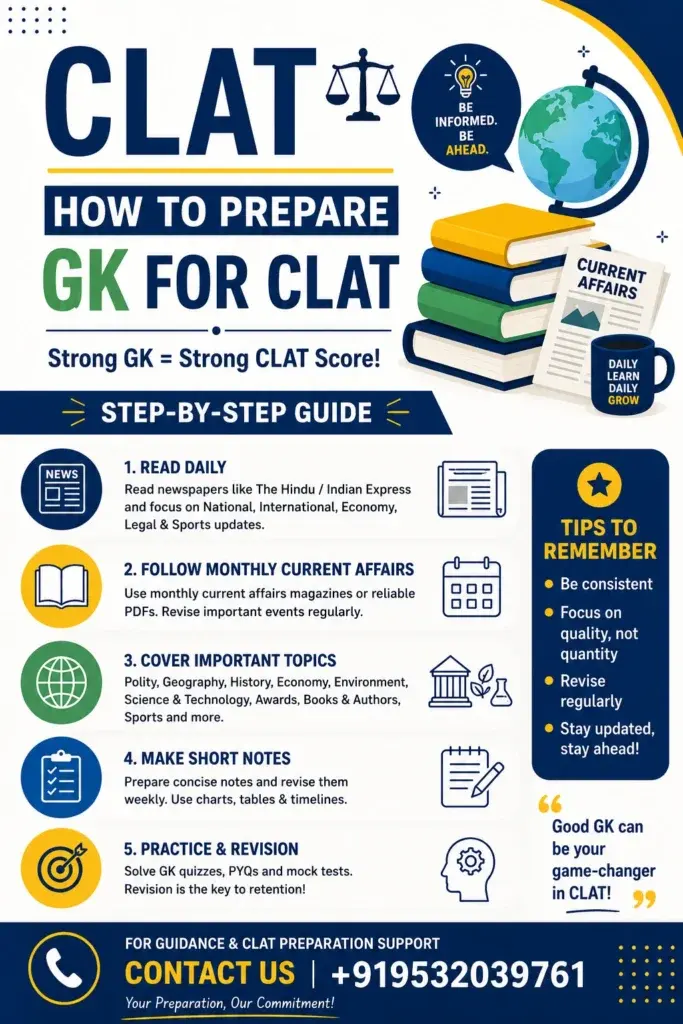
Hindustan Times sits between Times of India and The Hindu in terms of language difficulty and editorial depth. It has decent political and policy coverage and a reasonably strong opinion section.
Verdict: A solid middle-ground option, though it doesn’t distinctly outperform The Hindu or Indian Express in any specific category that would make it a first choice.
For aspirants in North India, The Tribune offers solid regional and national coverage with reasonably good editorial content, though its reach and depth on national/international issues is narrower than the national dailies above
Verdict: Fine as a regional supplement but not a substitute for a national daily with strong pan-India and international coverage.
| Newspaper | Language Level | Editorial Depth | Legal/Judicial Coverage | Best For |
|---|---|---|---|---|
| The Hindu | High | Very High | Very Strong | Overall best; serious, long-term aspirants |
| The Indian Express | Moderate-High | High | Strong | Explainers; second newspaper or alternative |
| Business Standard / Livemint | Moderate | Moderate | Weak (strong on economy) | Economic/policy supplement |
| Times of India | Low-Moderate | Low-Moderate | Weak | Beginners building the habit |
| Hindustan Times | Moderate | Moderate | Moderate | Middle-ground daily |
| The Tribune | Moderate | Moderate | Moderate | Regional supplement |
If you want a single, direct answer: The Hindu is the best overall newspaper for CLAT preparation, and if you can manage a second source, The Indian Express (especially its “Explained” section) is the ideal complement. Together, these two cover almost everything CLAT demands — language training, editorial reasoning, legal and constitutional developments, and current affairs — better than any single alternative.
That said, the “best” newspaper is ultimately the one you will actually read, understand, and retain information from, every single day, for the next one to two years. A newspaper you find so difficult that you abandon it after three weeks is worse than a simpler one you stick with consistently. If The Hindu genuinely overwhelms you at the start, there’s nothing wrong with beginning on Times of India or Hindustan Times for a month to build the reading habit and vocabulary, then graduating to The Hindu once you’re comfortable.

A common mistake aspirants make is trying to read the newspaper cover to cover every single day. This is neither necessary nor sustainable. Here is a more efficient, exam-oriented approach.
Not all sections carry equal weight for CLAT. Focus your daily time on:
You can largely skip: astrology, entertainment gossip, classifieds, and hyper-local city news, unless a specific story has national significance.
Passive reading — skimming without engagement — leaves almost nothing behind after a week. Instead:
Don’t rely on memory alone. Maintain a running document (physical notebook or a notes app) organised by month, where you jot down:
Spend five to ten minutes at the end of each day transferring the two or three most important pieces of news into this notebook. Over a year, this becomes an invaluable, self-made revision resource — far more effective than any third-party compilation because you wrote it yourself.
Set aside 30–45 minutes every Sunday to revise the week’s notes. At the end of each month, condense the month’s notes into a one- or two-page summary. This spaced repetition is what actually moves information from short-term to long-term memory — a single reading, no matter how careful, is not enough.
Reading the newspaper should not consume your entire study day. A focused 45–60 minutes daily (excluding note-making) is generally sufficient if done actively. Aspirants who spend two to three hours “reading the newspaper” every day are usually reading passively and inefficiently — better to read less, but more attentively.
A newspaper alone, however well-chosen, is not a complete current affairs strategy. Consider supplementing it with:
Daily (45–60 minutes):
Weekly:
Monthly:
There is no single newspaper that magically guarantees a good CLAT score — the newspaper is a tool, and like any tool, its value depends entirely on how consistently and intelligently you use it. That said, if you’re looking for the newspaper that best matches CLAT’s language level, editorial rigour, and legal-current-affairs overlap, The Hindu stands out as the strongest overall choice, with The Indian Express — particularly its “Explained” section — as an excellent complement or alternative.
More important than which newspaper you choose, though, is building the discipline to read actively, note consistently, and revise regularly, starting as early as possible in your preparation timeline. A daily habit sustained over a year will do more for your CLAT score than any single “best” resource read inconsistently. Choose a newspaper you can commit to, build the habit early, and let consistency — not perfection — carry you through to exam day.
The startup world just crossed a new milestone. According to the Hurun Global Unicorn Index 2026, released by the Hurun Research Institute

CLAT 2027 · GK & Current Affairs The Current Affairs Topics That Will Actually Decide Your CLAT 2027 Rank CLAT’s GK section is…
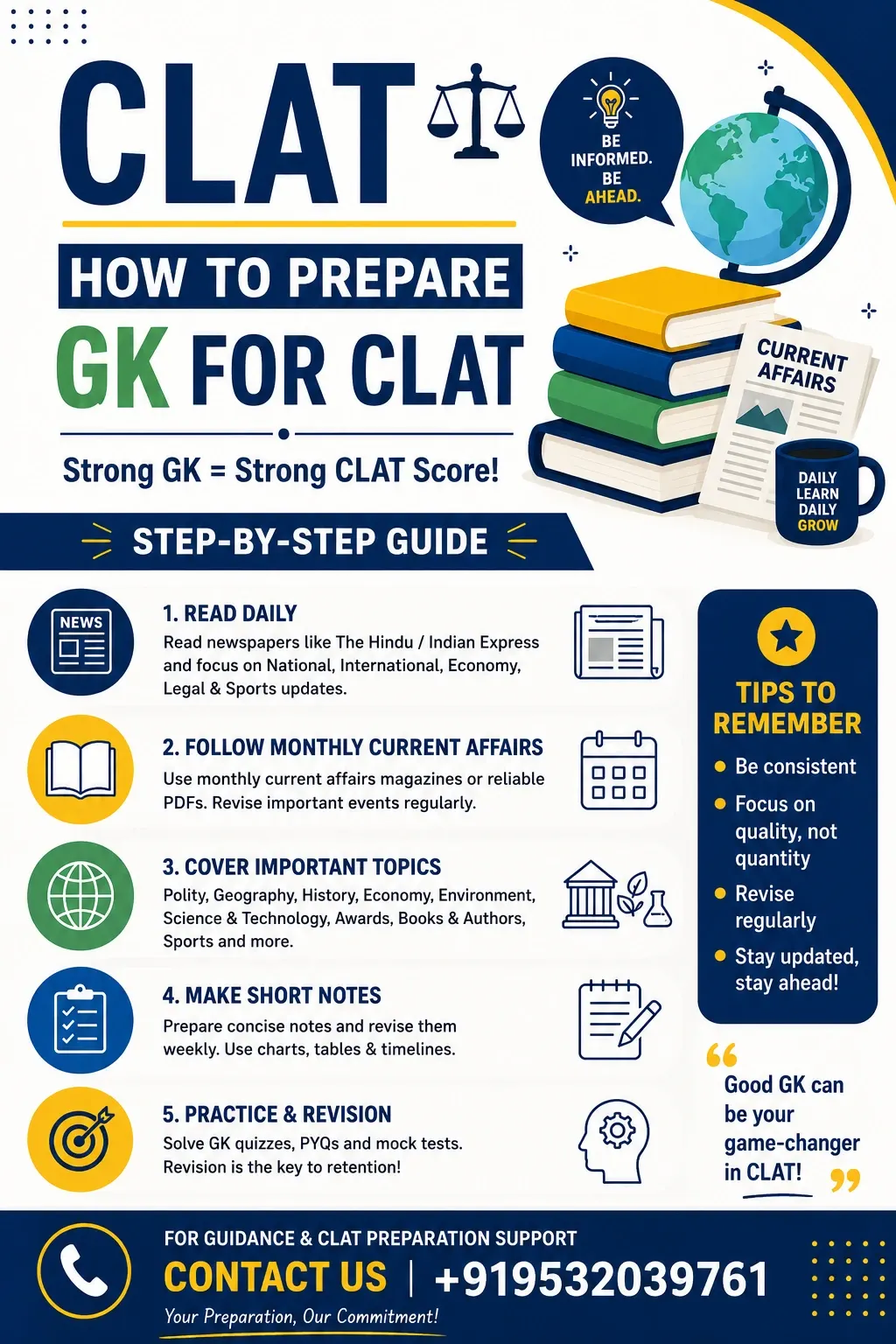
CLAT Prep Series · General Knowledge & Current Affairs · 2026 Complete Strategy Guide How to Prepare GK for CLAT From daily newspaper…