
CA & GK
India’s Stakes in the Global Pandemic Agreement
India’s Stakes in the Global Pandemic Agreement , Written by CLATIQs expert team
4 min read
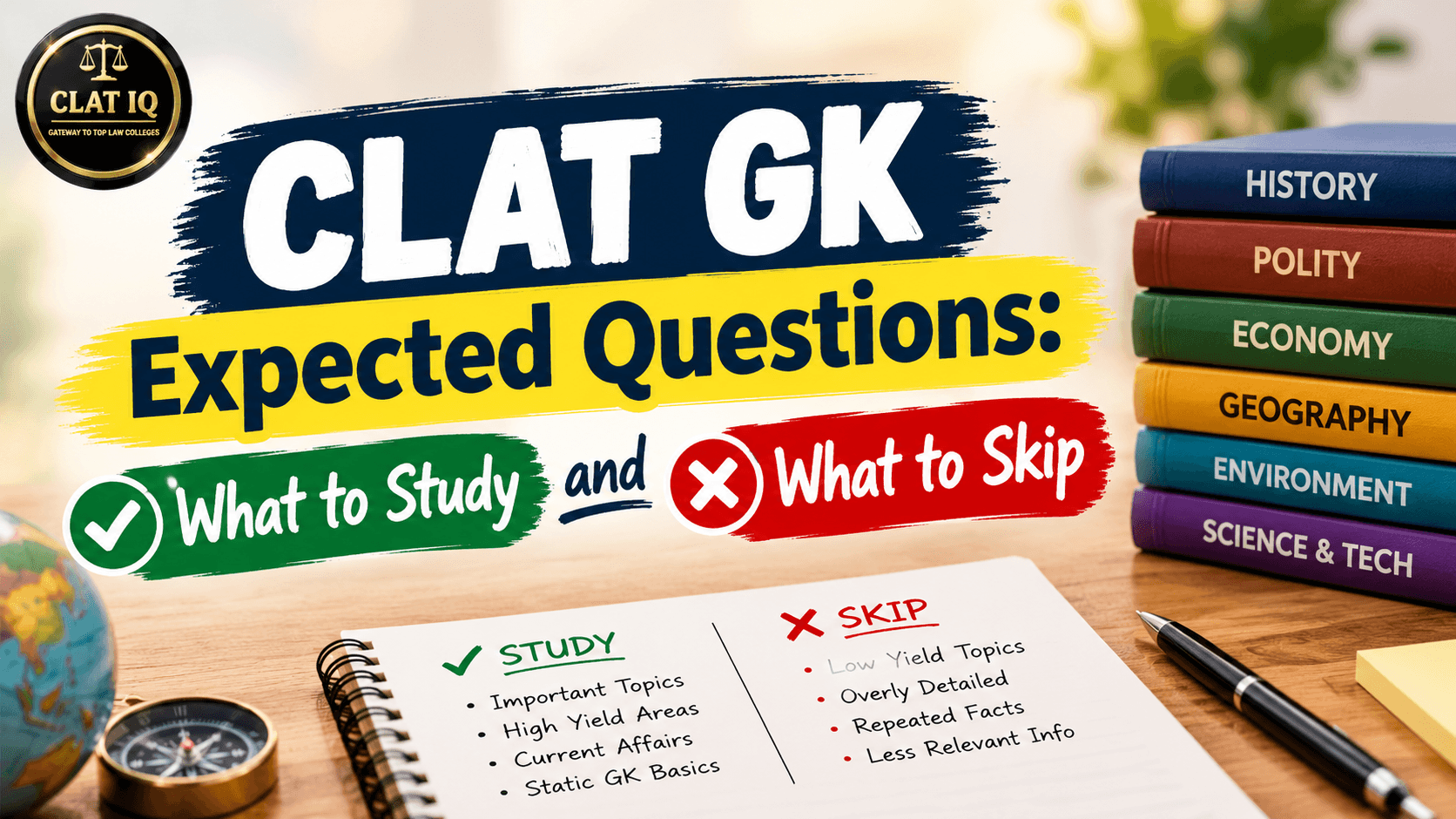
If you’re preparing for CLAT, the General Knowledge and Current Affairs section can be one of the most scoring parts of the paper, or one of the most frustrating. It carries roughly 28-32 questions out of 120, and they are passage-based, so you can’t rely on memorizing isolated facts. You need to understand context. Here’s where the questions are most likely to come from.
This is the highest-priority area. CLAT loves questions where law meets news. Focus on:
New criminal laws: The Bharatiya Nyaya Sanhita (BNS), Bharatiya Nagarik Suraksha Sanhita (BNSS) and Bharatiya Sakshya Adhiniyam (BSA) replaced the IPC, CrPC and Indian Evidence Act respectively, effective 1 July 2024. Know what each replaced and the major changes.
Landmark Supreme Court judgments: Know the case, the bench’s reasoning and the constitutional provision involved. Questions often ask “which principle was upheld?” rather than “who won?”
Constitutional amendments: The 106th Amendment (Women’s Reservation Act, 2023) is a classic example. Know the Articles it touched and when it takes effect.
Pending bills and committee reports: Law Commission reports and parliamentary debates can appear in passages.
Sample question: Which doctrine, laid down in Kesavananda Bharati v. State of Kerala (1973), limits Parliament’s power to amend the Constitution?
Answer: The Basic Structure Doctrine.
Static GK rarely changes, so it’s the easiest place to secure marks. Prioritize:
Indian polity: Fundamental Rights (Articles 12-35), Directive Principles, Fundamental Duties, and the President’s and Governor’s powers. Article 32 (right to constitutional remedies) was called the “heart and soul” of the Constitution by Dr. Ambedkar.
History: The freedom struggle, from 1857 to the Constituent Assembly debates. The Constituent Assembly took 2 years, 11 months and 18 days to draft the Constitution.
Geography: Rivers, national parks, mountain ranges and straits, especially those linked to news events.
Economy basics: GDP, inflation, repo rate, the role of the RBI, and the Union Budget’s key terms.
Expect two to four questions here. Study:
Summits and groupings: G20, BRICS, QUAD, SCO and COP, including host countries, themes and India’s role.
International organizations and courts: The UN and its agencies, the International Court of Justice versus the International Criminal Court, and the WTO.
Treaties and conventions: Climate agreements, human rights conventions and trade deals India has signed or is negotiating.
Bilateral relations: Major visits, agreements and disputes in the news.
Sample question: Which international body settles legal disputes between states?
Answer: The International Court of Justice (ICJ), based in The Hague.
These are lower weightage but easy marks if you revise systematically:
Awards: Nobel Prizes, Bharat Ratna, Padma awards, Booker Prize and Jnanpith. Nobel announcements happen every October, so recent winners are fair game.
Sports: Major tournaments, Olympic and Asian Games performances, and host nations of upcoming events.
Appointments: Heads of constitutional bodies, such as the CJI, CEC, CAG and Attorney General.
Books and authors: Recent releases that made news, especially those related to law, politics or social issues.
CLAT has been including more of these in recent years:
Environmental law and policy: The Environment Protection Act, national green tribunal rulings, biodiversity treaties and climate commitments.
Technology and law: AI regulation, data protection (the Digital Personal Data Protection Act, 2023), cybersecurity and digital rights.
Space and defense: ISRO missions and major defense acquisitions.
Legal and constitutional current affairs is the most important part.
CLAT is a law entrance exam, so the paper leans heavily toward questions where law meets the news: recent Supreme Court judgments, new laws like the BNS, BNSS and BSA, constitutional amendments, and key bills. Passages in the GK section often come from these areas, and the same knowledge also helps you in the Legal Reasoning section, so your time does double duty.
Second most important: static GK and polity. Fundamental Rights, Directive Principles, the powers of the President and Governor, and basic history and economy are stable topics that don’t change year to year. Once you learn them, they stay useful, so they are the safest marks.
Lower priority: international affairs, awards, sports and science. They appear, but with fewer questions each, so cover them after the first two.
A simple split of your GK time:
Legal and constitutional affairs: about 40%
Static GK and polity: about 30%
International affairs, awards, science and the rest: about 30%
Read one good newspaper daily. The Hindu or The Indian Express works best. Spend 30-40 minutes on the editorial, legal, national and international pages, and skip sports and entertainment unless something major happens.
Cover the last 12 months. CLAT focuses mostly on the year before the exam. For the upcoming attempt, that means building your notes from late 2025 onward, and doing a final revision of the last three months just before the exam.
Make monthly notes. Organize them by category: polity, law, international, economy, awards. A one-page summary per topic is far easier to revise than a pile of clippings.
Practice passages, not facts. Take mock tests that use CLAT’s passage-based format. After each one, note why you got a question wrong: was it a knowledge gap or a reading error?
Don’t ignore the “why.” CLAT rewards understanding. Don’t just memorize that a law was passed. Know what problem it addressed and what it changed.
The GK section isn’t about knowing everything. It’s about knowing the right things well. Spend roughly 40% of your time on legal and constitutional affairs, 30% on static GK and polity, and the rest on international affairs, awards and science. Stay consistent, revise often, and treat each news story as a possible passage.
India’s Stakes in the Global Pandemic Agreement , Written by CLATIQs expert team
CLAT PG 2027: Last Date to Apply, Registration Deadline & Latest Updates
Important Constitution Topics for CLAT2027 written by CLAT IQ's Expert team